
Make reporting work more manageable.
Start with your source data, then follow each decision through review and reporting.
Prepare packaging EPR data yourself: state sample workpapers
Use the government or PRO portal directly. These free examples show how to organize source data before entering it yourself.
Read articleCanada Federal Plastics Registry: free DIY sample workbook
Review fictional reporting-person and packaging examples, compare them with current federal requirements, and prepare your own portal entry.
Read articleWashington packaging EPR: free DIY data workpaper
A source-data checklist only. Washington’s packaging Recycling Reform Act is being implemented through rulemaking; this is not a current EPR filing.
Read articleOregon packaging reporting: free DIY sample workpaper
Organize a fictional example, then verify the data year, deadline, covered products, and portal steps with Oregon DEQ and CAA.
Read articleMinnesota packaging reporting: free DIY sample workpaper
Use a free fictional workpaper to gather source data and then follow Minnesota’s current producer reporting process.
Read articleMaryland packaging reporting: free DIY sample workpaper
Organize example packaging information and follow current Maryland Department of the Environment and CAA instructions.
Read articleColorado packaging reporting: free DIY sample workpaper
A free source-data checklist for producers preparing Colorado packaging information without reporting software.
Read articleCalifornia packaging reporting: free DIY sample workpaper
Organize fictional example data, then confirm whether your reporting path is CAA, PEPRS self-reporting, or another state-directed process.
Read article
Packaging reporting tutorials: six U.S. workflows and Canada-wide
See six configured U.S. reporting workflows, one Canada-wide packaging workflow and separate federal plastics research. Every tutorial is public and free to read before joining.
Read article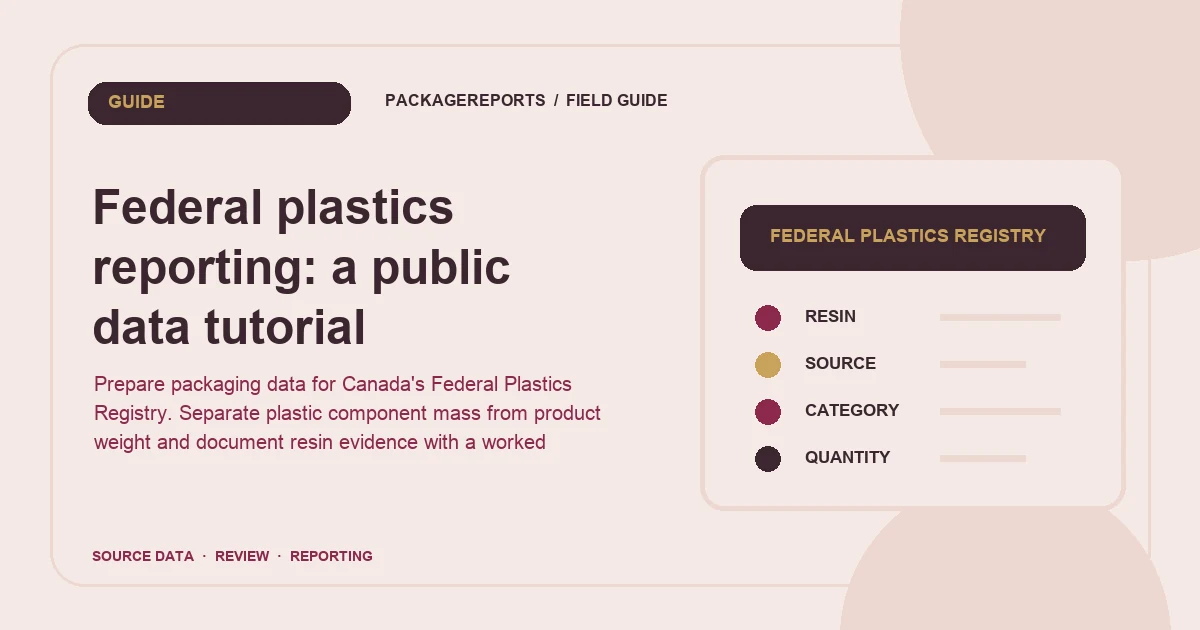
Federal plastics reporting: a public data tutorial
A finished product's gross weight does not tell you how much plastic is in its packaging. This exercise isolates an illustrative plastic component and preserves its material evidence for a separate federal reporting review.
Read article
Canada packaging data tutorial
Prepare one Canada-wide dataset with product records, component evidence and destination quantities. For applicable Federal Plastics Registry fields, keep plastic quantities by province and territory in the same workflow; do not create a separate form for each province.
Read article
Washington packaging data tutorial
Washington's Recycling Reform Act creates packaging and paper producer-responsibility duties with participation milestones beginning in 2026. This tutorial explains the official timeline and shows how to organize product, shipping-package and destination records for review.
Read article
Maryland packaging data tutorial
Two brands can share a packaging specification without sharing the same legal responsibility or supply quantity. This exercise prepares a clear handoff for a Maryland review.
Read article
Minnesota packaging data tutorial
A material description and a claim about packaging design are different kinds of information. This lesson prepares a mixed component list and makes unsupported claims visible for a Minnesota review.
Read article
Maine packaging data tutorial
A product catalogue often omits the packaging added when an order is shipped. This exercise inventories an illustrative online order before a reviewer decides how Maine instructions treat its components.
Read article
Colorado packaging data tutorial
This lesson shows why a useful packaging subtotal and an official program invoice are different. Start with a carton and insert, then build the physical evidence a Colorado reviewer can inspect.
Read article
Oregon packaging data tutorial
This exercise starts with one product sold in several states. You will isolate its Oregon quantity and explain a component total without treating all national sales as Oregon supply.
Read article
California packaging data tutorial
A package can contain several materials even when the sales system describes it as one item. This lesson follows a hypothetical pouch and label so you can see how to keep the physical facts ready for a California review.
Read article
Your first packaging dataset in PackageReports
Follow one product from supplier evidence to a reviewable preparation record. Understand the screens, the information to gather and the limits before deciding to join.
Read article
How to review a packaging calculation
Follow each reported amount back to the sales quantity, component weight and requirement version behind it. Check exceptions before exporting, and record an external submission only after it is actually filed.
Read article
Reconcile sales before a packaging report
A packaging weight only produces a useful subtotal when the product, destination, reporting period and net quantity are correct. Follow the import preview through matching and reconciliation before running a calculation.
Read article
How to prepare packaging data before reporting
Build a source-backed packaging record before calculating: identify every component, record its material and unit weight, link evidence, and resolve gaps with the people who own the data.
Read article
Your first PackageReports workspace: a practical checklist
A starting sequence for teams that have packaging data in more than one place.
Read article